7 November 2023

Helen Mills from the Centre for Crime and Justice Studies (CCJS) shares her thoughts on how joint enterprise laws disadvantage Black and minority ethnic young adults. CCJS is a member of the T2A (Transition to Adulthood) Alliance, a Barrow Cadbury Trust campaign that makes the case for a distinct approach to young adults in the justice system.
A call for meaningful action on joint enterprise was made in the House of Lords some weeks ago, amid new evidence that current laws act in a discriminatory way and require a parliamentary response.
Parliamentarians from all three main political parties raised questions following Lord Woodley asking the government:
“What steps they are taking to address concerns that joint enterprise case law operates in a harsh way against young black men.”
New data
The question followed new data on joint enterprise released by the Crown Prosecution Service (CPS) last month. The data is the first official research in over a decade about joint enterprise, the common term for the set of legal principles that allows more than one person to be prosecuted in relation to the same incident.
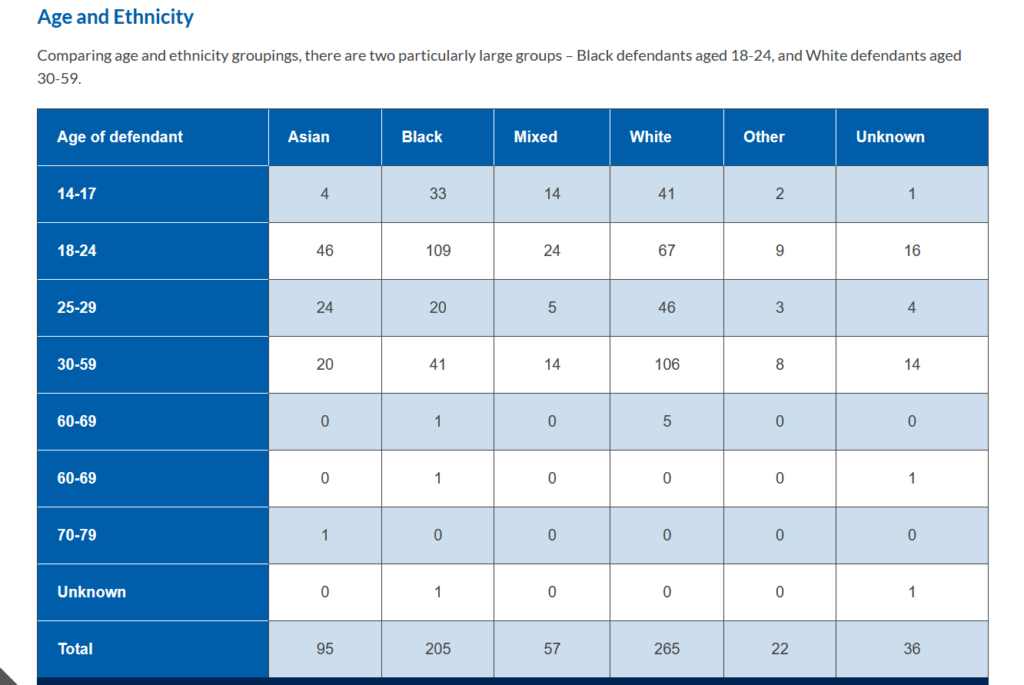
The CPS monitoring pilot, which tracked homicide and attempted homicide in six CPS areas, found Black young men aged 18-25 were the largest demographic prosecuted. Referring to the findings, Lord Woodley said:
“Black people are 16 times -I repeat, 16 times- more likely than white people to be prosecuted for homicide or attempted homicide under joint enterprise laws. It is absolutely shocking, as I am sure your Lordships all agree. Does the Minister therefore agree that this proves indisputably that joint enterprise is being used in a racist way by prosecutors, and basically as a dragnet to hoover up black urban youth?”
The CPS findings confirm those of previous studies. Last year research from the Centre for Crime and Justice Studies, supported by the Barrow Cadbury Trust, found these trends have been consistent over at least the last decade.
Calls for the CPS to monitor joint enterprise prosecutions date back to a Justice Committee brief inquiry in 2014. However, the CPS only agreed to monitor joint enterprise prosecutions earlier this year following legal action by the campaign group JENGbA. Their case drew on several Barrow Cadbury Trust funded research publications, including Dangerous Associations and the Usual Suspects.
Next steps
In Thursday’s debate, Lord Marks of Henley on Thames questioned the use of racialised ‘gang’ strategies in the prosecution of groups. Several peers also raised concerns about the high threshold for appeal faced by those convicted under controversial laws.
Pressed about what the government is doing in response to the data, Lord Bellamy conceded:
“It is an essential part of our criminal law to have a joint enterprise doctrine. The question is: where are the edges to the doctrine?”
He set out plans for the CPS to extend its monitoring of joint enterprise across England and Wales and to review its guidance on ‘gangs’. Both are welcome. However, neither are new actions, having previously been agreed in the legal settlement reached with JENGbA.
Helen Mills, Head of Programmes at the Centre for Crime and Justice Studies, who are currently supported by Barrow Cadbury Trust on this issue, said:
“We welcome the questions Lord Woodley and other peers are raising about young adults and joint enterprise. They demonstrate significant concerns, and questions about joint enterprise are a cross party issue. This requires the government to step up and commit to a comprehensive inquiry to address whether the current laws and practices underpinning them are fit for purpose, and what a fair, just approach to prosecuting groups looks like. They should not be to be dismissed by government as simply a legal matter to be left to the courts.”

The BBC’s Law in Action discuss concerns with joint enterprise laws around 13 minutes and 55 seconds in
Listen here 19 October 2023
Learning from Chance to Change Deferred Prosecution Pilot
Young adults
Bami Jolaoso, Senior Innovative Practice Officer at the Centre for Justice Innovation, reflects on a recent report evaluating the Chance to Chance deferred prosection pilot scheme.
In response to the Lammy Review, the Ministry of Justice piloted Chance to Change (C2C) deferred prosecution schemes across sites in West Yorkshire and London to address racial disparity in the youth and adult justice systems.
Why Deferred Prosecution schemes?
Deferred prosecution schemes remove the legal requirement for an admission of guilt, which allows people who have been accused of an offence to receive support and interventions that can address the causes of their offending behaviour, while avoiding court.
Though deferred prosecution schemes were not originally designed to address racial disparity, the removal of an admission of guilt has been found to tackle ‘inconsistent plea decisions’ between minoritised individuals (particularly black men) and their white counterparts. Deferred prosecutions schemes have also seen to improve trust and confidence in policing for participants and have higher rates of victim satisfaction.
The pilots have been evaluated by Manchester Metropolitan University, and they have recently published their final report based on a series of theory of change workshops and semi-structured interviews from practitioners and service users. While the West Yorkshire pilot was available to children aged 10-17 years old, the London pilot was for young adults, with both sites offering the scheme to those who would have received an Out-of-Court disposal (OOCD) or been charged to court.
Report findings: A Chance to Change?
The report found that there were many benefits to the scheme from practitioners (specifically Police) and service users alike. The offer of holistic, tailored support that was not enforceable was a huge benefit as participants felt like they were given an ‘opportunity’ to be referred into support, such as a substance misuse programmes or Child and Adolescent Mental Health services, that they would have been otherwise unable to access.
However, the report highlighted the need for training and a culture shift within policing as there was some confusion among Police officers that an admission of guilt was not required to refer individuals to the C2C schemes. Furthermore, some police officers were not aware that a person could be referred to the scheme even if they gave a no comment interview
This tension between practice and principle is mirrored across Police forces and Youth Justice Services across England and Wales, with the common misconception that a non-admission of guilt will impede on a participant’s level of engagement due to a perceived ‘lack of remorse’.
Studies indicate that a person’s understanding of guilt develops with their age and level of maturity. Considering the criminal justice system has a large cohort of 18–25-year-olds, a removal of this requirement is necessary in order to give people fair access to schemes. The requirement of guilt or outwards showing of remorse can disproportionality affect black and mixed heritage children (boys in particular) who are often adultified by professionals around them, which can result in certain behaviours being wrongly identified as showing a lack of remorse.
Some service users reported that the C2C scheme provided opportunities to improve trust and perceptions of Police, while others were sceptical of the scheme. For example, when interventions took place at a Police station, this caused anxiety for some participants and a feeling they had no choice in taking part in the scheme as there were worse outcomes for non-engagement.
In cases like this, we advocate moving interventions outside of formal justice settings and into the community, to encourage more engagement and develop links with support services once their criminal justice involvement is over. It is important to recognise that deferred prosecution schemes, though beneficial for minoritised people, still operate within a climate of mistrust and lack of confidence. Understanding the historical context of trust between the Police and minoritised communities is vital when developing these schemes.
The pilot found that issues stemming from policing can negatively impact service users’ trust in the Police and the wider justice system, and therefore their engagement with the scheme. Learning from this, practitioners should consider their policing practices, training and cultural competency in order to increase uptake from participants while improving practice, so minoritised communities are not overrepresented in local justice systems. Where appropriate and proportionate, police forces should aim to divert people away from the justice system as it reduces reoffending, allowing for service users to receive support while possibly avoiding a criminal record.
Supporting young adults
Importantly, there is a noticeable gap in identifying young adult’s experiences of deferred prosecution schemes. Young adults in particular have specific and complex needs that require distinct offers of support from practitioners who have been specifically trained to work with this cohort.
Though the report mentions that service users were offered tailored interventions, it was not made clear the level of support they were given and whether they received adequate exit planning. This is a legal requirement for children that should be offered to young adults too. Practitioners should assess the demographics of their area before setting up a deferred prosecution scheme and consider if they have the appropriate services for those aged 18-25.
New framework, better outcomes?
The new Police, Crime, Sentencing and Courts bill will be introducing a reformed framework for statutory out of court disposals, streamlining the existing six tiers into two tiers. The upper tier, the ‘Diversionary Caution’, simply renames the current conditional caution. The new ‘Community Caution’ is the name for the lower tier, and will be an umbrella disposal for outcomes such as penalty notices for disorder and simple cautions. Current non-statutory disposals such as Community Resolution, Diversion and Deferred Prosecution will continue to sit outside of this new framework.
Although the implementation for this new framework is fast approaching, the evidence shows that OOCDs are effective only when they scale down people’s contact with the criminal justice system. We hope that moving away from formally processing people in the justice system will continue to have significant reductions in reoffending, reduce the demand and cost on the justice system, and address the root cause of offending behaviour.

Learn more about pre-court disposals for adults
Click here 19 October 2023
T2A Chair Leroy Logan MBE responds to Alex Chalk’s recent statement
Young adults
T2A Chair Leroy Logan welcomes the government’s recognition that steps must be taken to use prison better and that short prison sentences are counterproductive. Prison population pressures have hindered progress on important initiatives to respond to young adults in age-appropriate ways. We hope that alongside the measures being taken to stabilise prison population growth, consideration is given to how best to support young adults to develop positive identities as they navigate the transition to adulthood while in custody. It is our hope that with the presumption against the use of short custodial sentences the creation of distinct young adult community sentences will be developed. Such initiatives are crucial for young adults to reach their potential and move away from crime and therefore key to rehabilitation and improving public safety.
While we understand the need for strong responses to serious offences careful consideration must be given to how to balance sanction and rehabilitation. Imposing longer sentences on young adults during a critical time in their brain development and social maturation may be counterproductive as removal from society for long periods seriously compromises their ability to build stability in employment, accommodation and relationships, all of which are known to have a great impact on subsequent offending. The greatest impact will fall on the most vulnerable, for young adults who are care experienced it will effectively remove the support available from local authorities that they are entitled to up to the age of 25.
We urge the government to put young adults at the heart of Ministry of Justice’s strategic approach to prisons and community sentencing, by developing and embedding distinct maturity appropriate interventions that ensure young adults are fully supported to live crime free lives.
9 October 2023
I’m speaking the same language as them” – How Peer Mentoring Changes Lives
Young adults
We spoke to Anthony Reid, Community Violence Mentor at St Giles Trust, about how his lived experience helps him mentor young people.
Anthony is part of a team of mentors that work with young people from the age of 13 up to the age of 25. The young people he supports have either come into contact with the criminal justice system or are at risk of becoming involved.
Young adults have a tremendous capacity for change, and Anthony is keen to share what he’s learned to help the young adults he meets.
“I have been on the wrong side of the law. I’m 41 now, and I’ve lived and learned a lot. I’m straight up with them. What I tell them is that it’s a jungle. There’s a lot of snakes and lions out there. It’s no joke.
Anthony’s experiences in the justice system are key to building a rapport with his mentees.
“I help them to see what the consequences of their actions might be. That’s the benefit. I have lived it, and I can show them where they might end up. They’re not seeing the negativity of the life they might be pursuing.”
“When I tell them about myself, my background, we see that we’re not too dissimilar. They know that I’m not chatting rubbish because we speak the same language. That’s how important lived experience is, you’ve seen the good and bad of that life.”
Referrals to the mentoring service come from a range of sources: social services, police forces, probation services, or schools. Young people can also be referred to the service by their family members or themselves.
Mentoring can be assigned to a young adult as part of their license conditions, but Anthony stresses that they need to be open to the process to gain the benefits.
“You’ve got to want to change. It has to start with you. That might mean changing your circle. You’ve often got to change your environment to move forward.”
Once a rapport is established, Anthony wants to understand what has brought the mentee to this point.
“I try to mentor each client for their individual needs. If something is happening, why are you behaving this way? What’s made you go out and sell drugs? Are you struggling at home? Do you not have enough money?
“I don’t bring it up directly, I drop it in smartly. I get to know them, talk about their environment and what they like to do. Eventually, we get down to what makes them behave this way.”

Anthony uses a strengths-based approach to help his mentees identify their skills and what a different pathway could look like.
“I focus on positive things that they can do. Basically, I had one client who was into motorbikes. He used to go out on a bike with a balaclava on because he wanted to get chased by police. It was an adrenalin rush.
“I tried to find a plan to see where I can get him to stop doing this. I said to him, ‘Why not get a mechanical internship?’ So, we found someone through one of our partners, and he signed up for an engineering course in bikes. I now communicate with him, his social worker, his mum, and have regular check-ins. That’s progress.”
Every time a young adult has a breakthrough is a special moment for Anthony.
“It’s massive for me to see someone take a different path. I had a kid, and his head of year messaged me to say that he’s doing well. He told me that he’s coming to school, he’s not getting into trouble, and it’s down to the work I’m doing.
“I thought I’m having a conversation, but I’m realizing it’s not just that, and that it’s having a positive impact on life. It’s those moments that make me feel like I’m doing a good job.”

Want to learn more about lived experience and peer support? Read the latest issue of the T2A e-newsletter
Our newsletter 2 August 2023
International report on young adults calls for justice system reform
Young adults
The Michael and Suzanne Borrin Foundation in New Zealand has conducted a research project to better understand how the criminal justice system could be reformed to meet the needs of young adults.
The report, authored by Nessa Lynch, focused on the region of Aotearoa where a number of young adult approaches have already been applied. This includes the Young Adult List Court, which has been operating at Porirua District Court for a short time. The report explains the key differences that have been made to better meet the needs of young adults:
“It is a District Court sitting, but with procedural modifications and processes to better support young adults, particularly those with communication difficulties. Any person aged 18-25 who is due to appear at the Porirua Court is allocated to this list.”
The Porirua District Court adapts the court process and offers additional support to empower young adults to engage in the process.
“There is specialist multidisciplinary support (e.g. psychologists, social workers) and procedure and communication by the judge and by the other participants is adapted for this age group. There is a focus on participation and ensuring young adults supported to fulfil their conditions and plans, with a view to resolving cases without a conviction where possible.”
The experiences and outcomes of the young adults from this specialist court were compared with another cohort of young adults from a comparison court. Young adults from the specialist court reported that they were better able to engage with the process and that judges took a tailored approach to their situation. It was also positive to see a strong focus on community interventions for young adults that aim to address the causes of offending.

It was noted, however, that some interventions may be placing an additional burden on young adults, so getting the balance right is crucial.
One of the report’s suggested reforms is to extend the provisions of the youth justice system to young adults. This might mean, for example, that a young adult could have additional speech and language support when appearing at court.
It does recognise, however, that this should not be done at the risk of damaging the integrity of the youth justice system – or the young people within it.
“If some young adults were remanded and sentenced to youth justice residences, it would also be important to ensure that this would not have any negative effect on the safety or provision of services to adolescents in the same facility.”
The report also considers the viability of creating a specialist system for young adults:
“The benefits of a third system approach are that it recognises the specific needs and characteristics of young adults. This is demonstrated in the discussion of the Young Adults’ List Court, where the procedure and services available are tailored to young adults.”
Since 2008, T2A has supported research and practice to identify effective approaches for young adults throughout the criminal justice system. We agree that a bespoke system that focuses on young adults’ strengths and capacity for change is the right way forward.
“The best protection for society is a young adult who has been reintegrated successfully into society and where the causes of the offending have been addressed.
“Positive outcomes in this age-group will have significant effect on re-offending rates, and particularly the life outcomes for young adult Māori.”

Want to learn more about effective approaches for young adults?
Research and reports 2 August 2023
T2A Position Statement on Young Adults in Youth Custody
Young adults
We recently wrote an open letter to the Minister of State for Prisons, Parole and Probation, Damian Hinds MP, on the subject of 18-year-olds being held in youth custody. We have included our policy position statement on the issue in full below.
T2A’s position on Extending Youth Justice provisions to Young Adults
HMPPS is currently retaining higher numbers of young adults in the children’s secure estate and on children’s youth justice caseloads. In April 2023, 22% of the whole children’s estate population and roughly 28% of the YOI population were young adults rather than children. This follows a Ministerial Directive—issued in December 2022 under Operation Safeguard—which stated that Youth Custody Institutions should hold young adults past their 18th birthday and transition them into adult prisons before their 19th birthday. One of the primary drivers behind this change is the major, growing capacity issues within the adult prison and probation systems alongside high levels of staff dissatisfaction and illness, and poor staff retention.
While it is unclear both whether this is a temporary measure and whether the government is actively considering merging young adults into the children’s system more systematically, in the light of the existing change in policy and the potential impact on both children and young adults, T2A has taken the opportunity to consider its position on the significant extension of children’s custodial spaces to young adults and has concluded that we have serious reservations about the policy which we believe must be reconsidered.
On one hand this represents an extension to existing policy. It is long-established practice for some 18-year-olds to have been kept within children’s institutions and on youth justice team caseloads for pragmatic reasons, for example, young adults on remand who are due to be sentenced within months and those who have youth justice Community Orders or Detention Training Orders to complete within a relatively short period of time, typically before their 19th birthday.
T2A has welcomed the new Framework for transitions from the child to adult custodial estate which was introduced in September 2022, and which created new processes within the Youth Custody Service to oversee and make placement decisions about all young adults transitioning. This has resulted in some 18-year-olds who have been assessed as standing to benefit from longer stays within the youth justice system – on account of their level of maturity, need for continuity from support services and the lead-in time needed to secure a place at a suitable adult institution. The implementation of this process took place in a similar timeframe to the Operation Safeguard decision, so it is not clear how much of the increase in proportion of young adults are a result of the new processes or capacity-driven decisions.
Having considered the evidence available to it of how practice is rolling out, T2A is of the view that the detrimental impact of a blanket policy of retaining 18-year-old young adults in the children’s system is both likely to outweigh the benefits to young adults and risks undermining children’s rights. While research suggests that the needs of young adults can be very similar to those of children (due to where they are in their psycho-social development journey), T2A has consistently called for a distinct approach for young adults i.e., one that draws on approaches to children but is separate to both child and adult approaches. Historically, T2A has made no specific recommendations for the youth system in its entirety to be extended to Young Adults though we have called for greater consideration of how youth provisions, including for example, magistrates trained to work with under-18, practice in youth courts and assessment tools could be adopted for young-adult specific provision. We have also advocated for ‘alternative approaches’ to be considered by policymakers in England and Wales. These include the Dutch approach, where the remit of the youth justice system extends to 25-year-olds, and the German approach, where courts can apply juvenile or adult law to young adults depending on needs and levels
of maturity.
To inform our position on the extension of juvenile custody to young adults, we have considered a range of factors. This includes the potential positive outcomes for young adults which could stem from this policy shift, provided this is in the context of there being a clear set of enablers and protections for children in place. This includes, for example,
- an opportunity to further raise awareness across youth and adult systems that young people do not become fully mature adults on the eve of their 18th birthday – a campaign point that T2A has been championing since its inception
- increased recognition of the distinct needs of young adults, and how the process of maturation, and the prevalence of developmental delays due to adverse childhood experiences and neurodiverse needs can mean these needs align closely with those of children
- greater stability of relationships with key members of staff and access to statutory provisions for children, including Child and Adolescent Mental Health Services (CAMHS) support which could mitigate the worst effects of the cliff-edge at 18, when these relationships and provisions currently end abruptly.
- reduction in poorly managed transitions which can prove incredibly damaging to young adults at a critical stage in their maturational development
- better appreciation of how training for youth practitioners and youth approaches support the needs of young adults and are likely to promote desistance, including for example, trauma-informed, exploitation-aware and child-first approaches.
Were this policy change be designed to appropriately support young adults and create a young-adult specific approach across the custodial estate, we would endorse it. However, in our view, any benefits to the individuals currently in the youth estate are likely to be significantly outweighed by the drawbacks, both for young adults and children. Poorly resourced and reactive changes to capacity issues are likely to compromise existing provision for children and come at the expense of their welfare or the rights and protections that are afforded to them for good reason, while not benefiting young adults who may not get access to appropriate services. Indeed, we have heard that there has been increased deployment of enforcement mechanisms, including dogs, adult restraint techniques, and discussion of the potential introduction of PAVA spray, for example. Other drawbacks include young adults’ needs becoming secondary to children and a potential detrimental impact on the outcomes of young adults who are ready to transition to the adult estate which can, managed well, be an opportunity for a young adult to reinvent themselves, establish new relationships and mark a personal development milestone.
T2A maintains its view that there should be a distinct approach to criminal justice for young adults which adopts and adapts practices which have been developed for children to better support healthy maturational development, enables young adults to form positive self-identities, and minimises the detrimental impact of the criminal justice system on their long-term outcomes whilst seeking to maintain public safety. Our ideal is that this would be delivered through a separate system which is developed carefully, following consultation, and funded adequately.
July 2023
27 July 2023
New care guidance for criminal justice professionals informed by young adults
Young adults
Earlier this year, HMPPS produced their Care Experience Matters guide for prison and probation staff and leaders, and local authority staff. The guide looked at how to support people with care experience in custody and on probation – primarily young adults up to the age of 25.
Centering young adult voices in the design and delivery of professional guidance allows for much more tailored support. That’s why T2A was particularly pleased to see that this new resource reflects the experiences of those who’ve been in care and involved in the criminal justice system.
The guide also contains links to other HMPPS training resources that will help professionals feel more confident about using these tools.
Young adults may be reluctant to talk about the fact they’ve been in care. To help make this easier the guidance stresses taking the time to develop relationships with young adults. It also emphasises how crucial it is for a safe, supportive space to be created where young people feel able to open up about their life experiences.
The guide is helpfully broken down by profession with distinct guidance for prison officers and leaders, probation officers and leaders, and local authority staff. Professionals can also learn more about what each service offers, as well as their respective responsibilities to young adults, making it easier to work collaboratively. This means young adults are more likely to have a seamless network of support across each service.
Each chapter also includes reflections from young adults who have been in care. These first-hand accounts are hugely informative and allow practitioners to see what effective support looks like from a young adult perspective.
One incredibly valuable insight for T2A was that many young adults were not aware that, because they had been in care, they were still eligible for support from a personal advisor (PA) after the age of 21- and in fact up to the age of 25.
Many young adults said that their PA was often their only contact with the outside world, and they relied on this support during their time in custody.
“Visits give you a connection to the outside world. There is no escape otherwise.”
(Lord Farmer Review, 2017)
Here at T2A, we champion the sharing of best practice guidance informed by young adults’ views, voices, and experiences. Creative approaches like these will reduce crime and ensure the best long-term outcomes for young adults.
Want to learn more about how you can support young adults?
Guides for practitioners 27 July 2023
Peer Hearing – community interventions by and for young adults
Young adults
We recently spoke to Natalie Wilks, Managing Director of Jonah’s Project CIC, about their new Peer Hearing project – part funded by the Barrow Cadbury Trust.
The inspiration for the pilot came from US-based community courts. Natalie explains: “I came across the practice of peer courts in the US three years ago. They harness the power of local partners and community organisations to provide interventions and pathways away from crime.”
In 2007, there was a community court pilot in the Birmingham Magistrates’ Court. Unfortunately, Natalie found that there was limited information available about the pilot’s outcomes.
“There was no data, and only two news stories. I was initially just interested in learning more about what a peer court here in UK might look like, so I started to do some more digging.”
Natalie contacted Assistant Police and Crime Commissioner (PCC) for the West Midlands, Tom McNeil, and she was put in touch with some organisations who were developing problem-solving courts.
Tom McNeil adds: “I’d been told Natalie had a reputation for helping young people make great progress in education, when struggling with various issues, including being misunderstood for their neurodiversity. I made lots of introductions for her and advocated funding because there was something special about Natalie and her ability to see potential in everyone.”
This led to an introduction to T2A and a subsequent collaboration to develop a peer court pilot in Birmingham. The services Jonah’s Project CIC provide are shaped and influenced by the young people they support, so Natalie wanted to involve them from the very beginning of the project.
“The young people we work with were very skeptical of the programme. But then they attended a meeting about what it might involve and started to look at the research behind it.”
Their vision for a peer court service designed by and for young adults was born.
“They changed the name from ‘peer court’ to ’peer hearing’. None of us wanted such a formal process. Instead of jury members, the young adults on the panel are now called peer reviewers.
“No young adult who is referred to us will be called an offender. Instead, they will be the presented young person. The young people we support came up with this and have been very influential in the way we’ve developed it.”

The peer reviewers will receive expert training to prepare for the role. Natalie adds: “The training will help young adults look at their biases and better understand them. We’ll also cover critical thinking, active listening, safeguarding, confidentiality, and collective decision-making.”
Jonah’s Project CIC has recently moved into a new premises where the hearings will take place. Natalie expects that the team will start receiving case referrals from West Midlands PCC by the Autumn.
“When we’re set up, a referral will come from the police straight to us. We then go visit the young person they’ve referred to see what life is like for them at present.
“They then come to a peer hearing with a panel of no more than four to five peer reviewers. One of the peer reviewers will be an advocate for the presented young person and be their voice if they can’t use their own.”
Natalie aims to create a safe and supportive environment where every young person feels able to open up about their situation.
“It’s more of a motivational interviewing set up where we coach the young person. What would have happened if we went a different way? How did we end up here? What would a different path look like?”
This positive approach helps the panel gain a much better perspective of the young adult’s situation.
“The panel can then decide on an appropriate community intervention. This could be employment, sports, mentoring, therapy, family support or whatever else might be needed.
“We want to use local partners where possible, rather than big organisations, so young adults don’t feel like they’re getting lost in the system.”
Natalie and her team have developed an intervention log, so the young person’s progress can be recorded.
“We’ve got assessment tools that practitioners can use to track a young adult’s development, and all these interactions will be added to the log and shared with the community partners involved in the case.
“We’ll also have short catch ups with each young adult to make sure they’re happy with their intervention and that we’re all on the same page.”
The length of the intervention will be tailored to each young adult’s needs. Jonah’s Project CIC also plans to stay in touch further down the line.
“Once the intervention is finished, we’ll check in three, six and nine months down the line. We want every young person to have the best chance to succeed.”

Want to learn more about Jonah’s Project CIC pilot Peer Hearing service?
Visit their website 27 July 2023
Q&A with Karene Taylor, Leaders Unlocked
Young adults
We recently interviewed Karene Taylor from Leaders Unlocked, which has been funded by the Barrow Cadbury Trust since 2016. We spoke with Karene about the value of peer support, joining the Campaign Management Group (CMG) that influences T2A’s work, and how employing people with lived experience in HMPPS roles would change the system for the better.
What were your first thoughts when you were approached about joining the CMG?
When I first got asked, I was apprehensive about joining. I was thinking, ‘Do I belong alongside these people who have a history of working in the justice system? I’ve been in the system. Is that enough?’
When you’ve been in the justice system, you feel that your wings have been clipped. That’s why I ultimately decided to join. Representation is key, and I want other young adults to see that this is possible for them too.
I have a unique take and opinion that the rest of CMG can’t offer. I represent people that often aren’t heard. Going through the justice system as a young adult is incredibly tough, and if I can help in any way, I’m glad to have played my part.
How have you found the experience so far?
Young adult participation can be tokenistic, but I always feel my opinion matters.
I’ve found it eye opening to learn about the different issues affecting young adults coming through in the reports from our partners.
But I feel there’s a huge gap between what’s being recommended and what’s being actually done. There are amazing recommendations to improve things for young adults, but no action is taken. I would really like to push for the recommendations to be implemented, and then for us to build on what comes out of that.
How do you include young adults in the work Leaders Unlocked do?
At Leaders Unlocked, we’ve been going into prisons to talk to the young people about their experiences and the current issue we’re seeing where young adults are remaining in the youth estate beyond their 18th birthday.
I can talk to them because I’ve been where they are, and I want to make a difference. I want their real life honest-to-God opinions. We do reports, but they’re collaborative. We want to help and work with young adults and prison officers too.
We created guides to introduce young men and women to the adult estate. We heard what young people were saying and worked together to make a guide. We made it with them and for them.
This also led us to develop training for prison officers to help them communicate more effectively with young adults.
How have you been involved in influencing policy and research?
I’ve been working with Gemma Buckland and UKABIF on a project examining acquired brain injury (ABI) and neurodiversity in young adults. What we’ve found from the Freedom of Information requests about practice in police custody suites is that only two out of 40 police force areas have extra help available for people with a brain injury and none have specific approaches to consider maturity in young adults.
Of the two that did, 39% of the young adults they assessed had ABI or another form of neurodiversity. That must mean there are many young adults going through the justice system with undiagnosed neurodiversity or ABI.
There are also young people out there with undiagnosed autism or ADHD who don’t have the support they need to participate in their trial or to fully understand the process.
You deserve the right to a fair trial, but how can you have a fair trial if you’ve not been diagnosed, and that information presented to the court?
We have co-created a poster to help young adults with brain injury to understand what options they have for support and advice when they are in contact with the criminal justice system.
How can HMPPS empower young adults with lived experience to take on roles in CJS policy and frontline practice? What would the benefits of this approach be?
Leaders Unlocked are incredible at doing this. We say: “Your experiences are your superpowers.”
HMPPS should open pathways for young adults to take on roles in the justice system. But it should be clear that you’re not there as a case study or to add a line to a report about what you’ve gone through. This isn’t tokenism.
The message has to be that your voice can be impactful. We value everything you’ve been through and the perspective that gives you. We want you to work for us because of all that you can bring to the table.
What would the benefits of this approach be?
Young adults who don’t trust those in authority roles won’t tell them what’s going on, but people with lived experience can make those connections. They can say: “Talk to me. I get it. I know you’re struggling. Let me help.”
The young people who are in and out of the justice system don’t see themselves in the people they’ve worked with.
I would love to see prison officers with lived experience who can add a level of depth to those interactions with young adults.
It would make the rehabilitation programmes and activities much more effective as the people delivering them understand what life in the justice system is like. They can be role models for young adults and show them what’s possible.
That is absolutely inspirational for the young adults who are in the system. They can see that things can change and get better because right there in front of them is someone who was in their shoes and is now thriving.
What I’ve been through in my life has meant that I can speak to people who’ve been in trouble, to inspire them to change things. Some of the young people I’ve met would never have thought about using their experiences in that way, but they’ve come to meetings because I’ve reached out. Now they want to change things. They’ve seen it in me. They want it for themselves.

Learn more about working effectively with young adults
Guides for practitioners 18 May 2023
New approach to young adult diversion in US
Young adults
Young adults, aged 18-25, represent 10% of the UK population, but over 30% of all police cases[1].
One of the reasons behind this huge disparity is because there is a “cliff edge” in support when young adults turn 18 years of age and state support evaporates. Furthermore, emotional maturity and life experiences are not always sufficiently considered when young adults come into contact with the justice system.
Our T2A Alliance Partners, Revolving Doors, published an evidence review in 2021 which explored how tailored diversion schemes can increase maturity and reduce the likelihood of reoffending. The review pulled together the “key elements of support that can be provided as part of an out of court disposal that can turn young adults’ lives around”.
New approaches to diversion are being developed across the world, and last month we warmly welcomed a new report from the Emerging Adult Justice Project (EAJP) in the US. It set out 13 promising practices for the design and implementation of young adult diversion schemes.
Report authors, Noor Toraif and Lael Chester, believe that diversion should be the default approach for young adults and that cases where diversion is not pursued should be transparently reviewed on a regular basis. Lael Chester explains:
“Pre-arraignment diversion should be the default in every jurisdiction, and it should be tailored to the developmental stage. Most youth will desist from criminal behavior as they mature, and successful diversion can both support and accelerate this process. It’s a small investment for a big outcome that benefits us all.”

It’s incredibly positive to see organisations across the world affirming the fact that young adults are a distinct group with distinct needs. When we work together with young adults and listen to their experiences, we can get things right.
New Generation Campaigner Natasha expresses this better than we ever could:
“What made the biggest difference for me was having a consistent support worker who worked with me at every step of my journey, taught me how to notice patterns, followed up after I left the service, and encouraged me to seek help. I liked how they did not judge me or make me feel less than. This made me see the light at the end of the tunnel and push me to make the positive changes and embark on my journey to change.” (Foreword, Evidence review: diverting young adults away from the cycle of crisis and crime)
[1] Revolving Doors analysis based on Ministry of Justice. 2019, Criminal Justice System Statistics publication: Outcomes by Offence 2008 to 2018: Pivot Table Analytical Tool for England and Wales

Learn more about the young adult evidence base
Research and reports